
NEWS & TOPICS
- HOME
- NEWS & TOPICS
- Eight Students and Faculty Members from Mongolia Visit Japan for Science Education Training
Eight Students and Faculty Members from Mongolia Visit Japan for Science Education Training
2026.10.08 updateNews
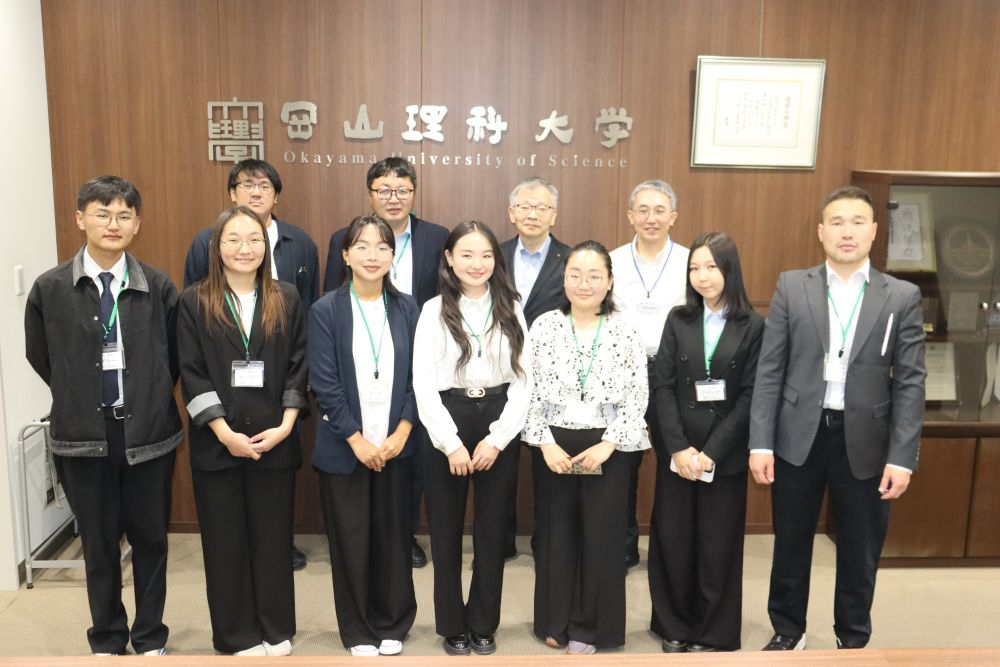
The delegation from the New Mongol Institute of Technology and Mongolian National University of Education pays a courtesy visit to OUS President Hiroyuki Hirano (second from right, back row)
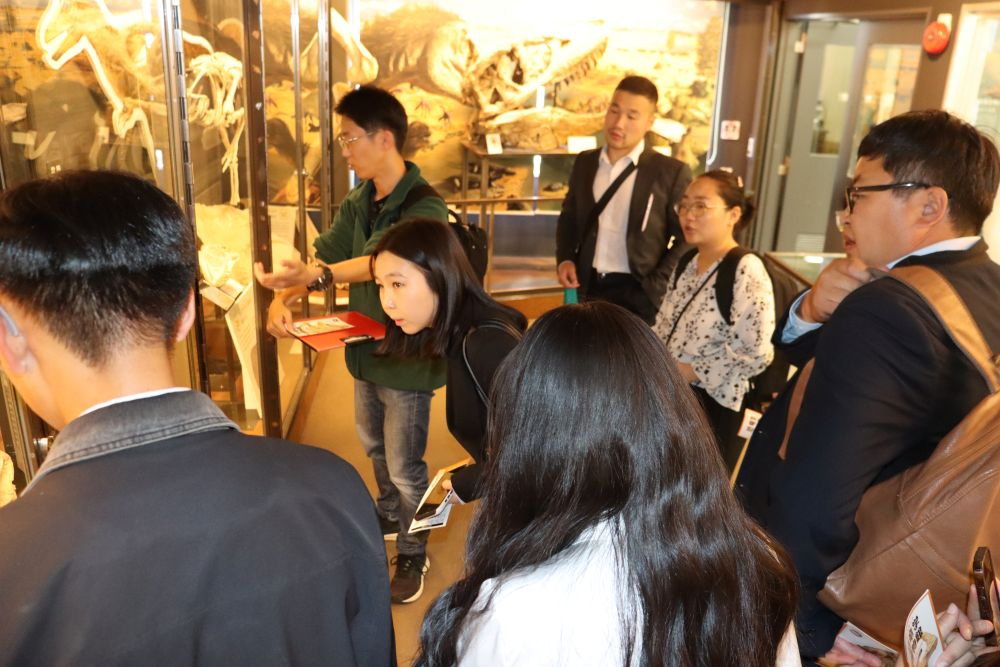
The delegation tours the Museum of Dinosaur Research
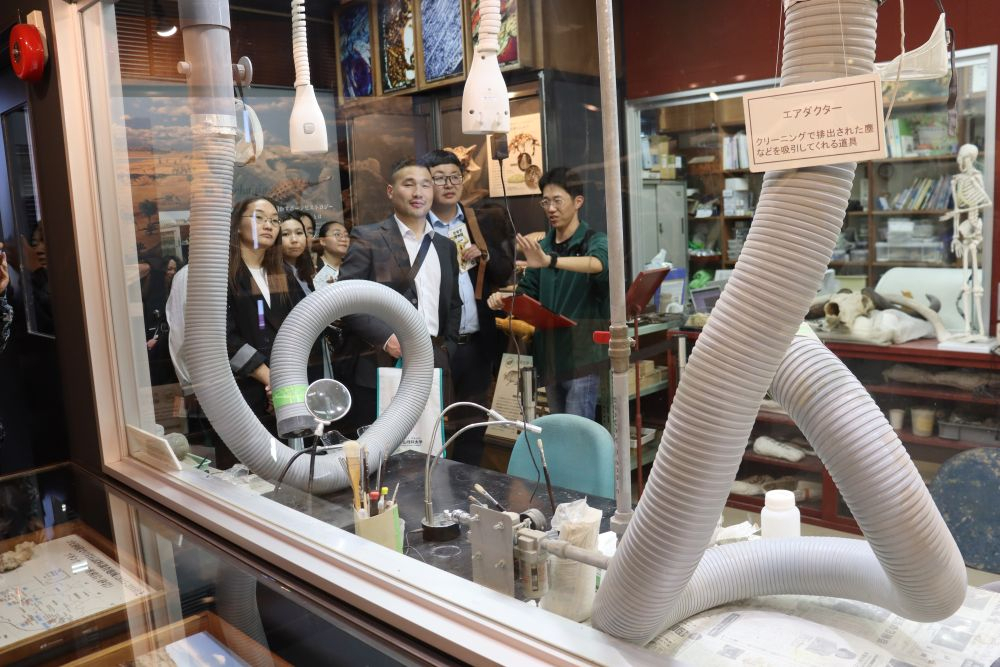
Mongolian students listen to an explanation of the museum, which also houses active research facilities
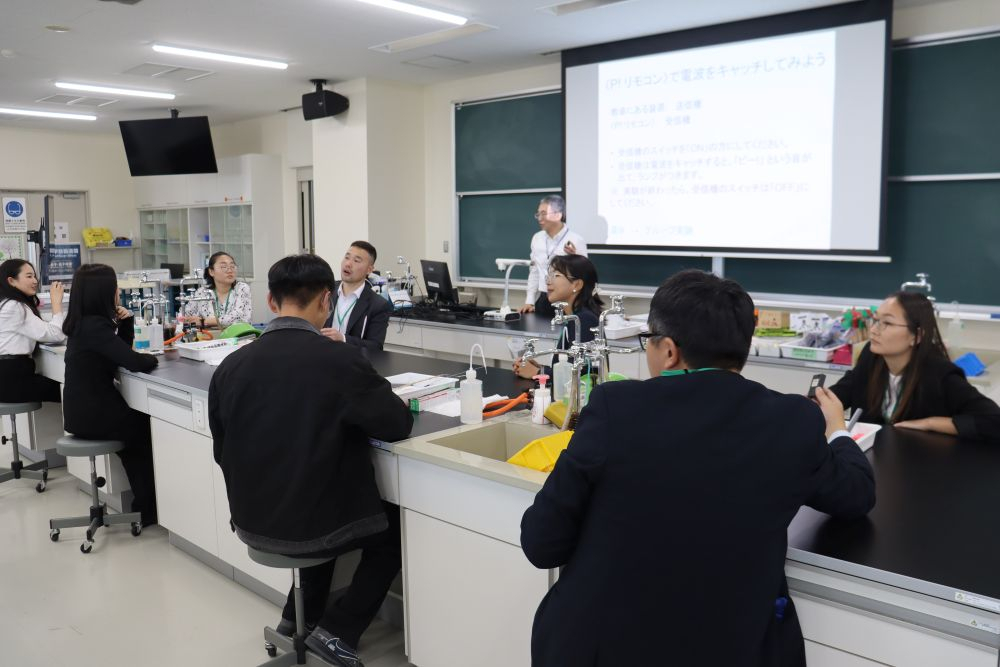
Mongolian students participate in an experiment to detect radio waves
Sakura Science Program
Okayama University of Science (OUS) has been selected to participate in the 2026 Sakura Science Program, organized by the Japan Science and Technology Agency (JST). The program invites talented individuals from around the world to Japan to experience the country's advanced science and technology, as well as its culture.As part of the program, six students and two faculty members from the New Mongol Institute of Technology and Mongolian National University of Education are visiting OUS from October 7 to 11. During their stay, they will learn about science teaching methods, including the development of educational materials.
The theme of the exchange program is "Inquiry-Based Science Teacher Training and Hands-on Materials Science Research for Aspiring Teachers from Mongolia."
On the first day, the delegation paid a courtesy visit to OUS President Hiroyuki Hirano and explained the purpose of their visit. President Hirano highlighted the university's longstanding ties with Mongolia, including land-based aquaculture using the university's proprietary Third Water technology, dinosaur fossil excavations in the Gobi Desert, and connections through the Faculty of Veterinary Medicine. The discussion also touched on the popular Japanese television drama VIVANT, which is partly set in Mongolia, creating a friendly and relaxed atmosphere.
Following the meeting, the visitors were introduced to examples of physics teaching materials and participated in hands-on activities. They also received an overview of the university's Science Volunteer Center and toured the Museum of Dinosaur Research. In addition, they explored educational materials related to electromagnetic waves.
Activities scheduled for the following days include exchanges with students enrolled in the International Baccalaureate (IB) teacher training program and tours of facilities equipped with a scanning electron microscope and an X-ray diffractometer.